Rubrique : Cyberstratégie

En réponse à une demande d’expertise de la Délégation aux Affaires stratégiques du Ministère de la Défense nationale, Olivier Danino, chercheur à l’IFAS, a rédigé un document disponible en ligne, Utilisation stratégique du Cyber au Moyen-Orient, dont voici la table des matières : Partie 1 : Les acteurs du (...)


Lire la suite ...
Rubrique : Cyberstratégie

Le 23 avril Eric Xu, vice président exécutif de Huaweï, a déclaré : « Nous ne sommes plus intéressés par le marché américain ». Fin mars, le gouvernement chinois manifestait son « fort mécontentement » à l’égard d’une mesure législative de renforcement du contrôle des achats de technologie avancée en (...)


Lire la suite ...
Compte-rendu
Rubrique : Cyberstratégie

Sommaire-Les capacités de cyberoffensive sont nécessaires à la cyberdéfense

Les États-majors de cyberdéfense de par le monde se posent depuis quelque temps la question de l’opportunité de développer des moyens de cyberoffensive afin d’avoir de bonnes aptitudes défensives, et la réponse est affirmative, (...)


Lire la suite ...
Rubrique : Cyberstratégie

Sommaire-

La rétroconception (reverse engineering) est aussi vieille que la technique, et les polisseurs de pierre de toute l’Europe se sont probablement évertués à reconstituer les méthodes de fabrication des lames de silex du Grand-Pressigny, qui s’exportaient jusqu’en Hollande et aux Îles (...)


Lire la suite ...
Cela peut-il marcher ?
Rubrique : Cyberstratégie

Sommaire-La protection des systèmes fédéraux américains

Face à l’augmentation en nombre et en gravité des cyberattaques contre les systèmes informatiques des agences fédérales civiles, le gouvernement américain, et plus précisément la National Cyber Security Division du Department of Homeland Security, a (...)


Lire la suite ...
Rubrique : Moyen Orient et monde arabo-musulman

« Le Monde » a pu constater sur place que le régime syrien utilise des gaz chimiques, ce que Barack Obama avait qualifié de « ligne rouge ».

Mais à Bruxelles, faute de consensus sur une potentielle intervention, les Vingt-Sept privilégient une solution politique.

On a voulu (surtout les Britanniques) (...)


Lire la suite ...
Rubrique : Moyen Orient et monde arabo-musulman

Lors de sa rencontre jeudi 16 mai 2013 avec le Premier ministre turc Recep Tayyip Erdogan, le président américain Barack Obama a confirmé sa volonté de ne pas intervenir militairement en Syrie. Les media y ont vu l’aveu du désengagement des États-Unis au Moyen-Orient, voire même de leur désintérêt (...)


Lire la suite ...
Talk at the Lennart Meri Conference, Tallinn, 24-26 May
Rubrique : Moyen Orient et monde arabo-musulman

Sommaire-

Geopolitics relies on a combination of directions that are not necessarily determined by geography but rather by the components and priorities of the national interest.

Some slogans are crystal clear : “Drang nach Osten, Go West Young Man, the North-South relationship, Ostpolitik”. (...)


Lire la suite ...
Rubrique : Moyen Orient et monde arabo-musulman

De par sa nature, l’arme chimique (très diverse) reste d’un emploi délicat. Les gaz peuvent être simples et efficaces comme la vieille ypérite à base de chlore, utilisée en 1917. Plus ils sont sophistiqués (sarin, tabun, VX) plus ces gaz exigent de compétence pour assurer la dispersion efficace du (...)


Lire la suite ...
Rubrique : Les chercheurs

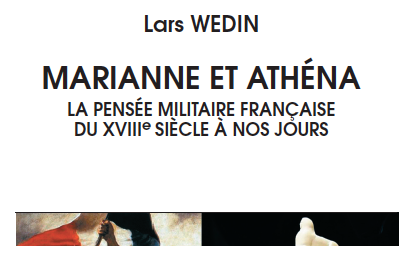
Capitaine de Vaisseau (CR) Lars Wedin, Marine Suédoise

Membre de l’Académie de Marine

lars.wedin@fhs.se

Tel : + 33(0)4 50 93 12 80

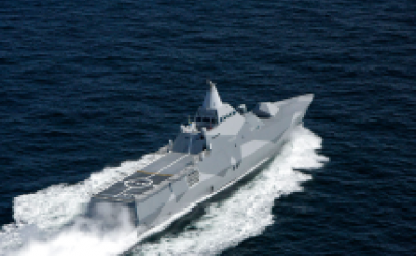
Capitaine de vaisseau de la Marine suédoise, Lars Wedin, né à Stockholm 1947, a été promu officier en 1969. Officier des forces de surface, il a servi sur des vedettes (...)


Lire la suite ...
Rubrique : La crise iranienne

Sommaire-

With the clarification of the names of the candidates in Iran, the focus now has shifted to their possible policies. A key question for Iran analysts concerns Iran’s nuclear program - which has emerged as the most complex issue in Iran’s foreign policy since the end of the war with (...)


Lire la suite ...


Sommaire-

With the clarification of the names of the candidates in Iran, the focus now has shifted to their possible policies. A key question for Iran analysts concerns Iran’s nuclear program - which has emerged as the most complex issue in Iran’s foreign policy since the end of the war with Iraq in 1988 – and what direction it will take with each of the presidential hopefuls if he wins the election in June.

My prediction is that, if international sanctions continue, regardless of who is elected in June, his government will retreat from the current position on the issue and agree on a compromise. By “retreat” I mean the acceptance of the P5+1 conditions, i.e., ending all the activities that, according to the International Atomic Energy Agency, may lead to the production of nuclear weapons.

This view is not a confirmation of a quite popular notion that the future president of Iran will play absolutely no role in influencing the direction of the country’s foreign policy or the nuclear issue and that it is only the Supreme Leader who, through his inflexible views, determines the fate of such issues. While the Leader in the Islamic Republic is the most decisive element in directing Iran’s foreign and security policies, one should not forget the fact that, under the rule of the very same Leader, Mohammad Khatami’s administration established completely different relations with the EU and no UN Security Council resolution was passed against Iran.

The above-mentioned prediction is not therefore based on dismissing the role of the executive branch in relation to the foreign policy of Iran but merely to emphasize another fact : Iran cannot, in the long-run, continue to resist international sanctions.

The Impact of the Latest Round of Sanctions

Iranian officials repeatedly announce that various international sanctions, which have been in place for three decades now, will never force the regime to change its strategic policies. But the reality is that the nature of the sanctions that have been instituted against Iran’s oil industry and banking system over the past year are fundamentally different from those that existed in any other time in Khamenei’s era.

Iran’s economy has never been sound and Iranians have continuously suffered because of different economic problems. But the intensity of the crisis that has followed the extensive oil and banking sanctions last summer is not comparable to anything the country has faced since the end of the war with Iraq.

In the past year, it is thought that Iran received only half of the estimated 100 billion dollars that it had expected to earn from oil sales. Furthermore, in the planned budget for the current year, a 30 billion dollar oil revenue is predicted, indicating a major drop in income for a regime which receives 70 percent of its foreign exchange requirement from oil exports. On the other hand, even with oil sales, because of the sanctions of Western governments against Iranian banks, the country’s financial institutions cannot receive the oil revenues from their foreign customers.

One common response to the view that international sanctions will result in a retreat by the Iranian regime on the nuclear issue is that Iranian rulers may not be concerned about the living conditions of their citizens or fear greater pressures on them and thus will not change their policies. The point is that even if the regime disregards the economic pressures on the public, one cannot ignore the fact that a drastic fall in the revenues of the Iranian regime translates into a serious fall in the budgets of its security and military agencies and even the impossibility of meeting the direct and indirect expenses of the nuclear program.

At the same time, there is no doubt now that if Iran does not demonstrate flexibility over its nuclear program, new international sanctions will target the remaining sources of revenue of the Islamic regime.

The Myth of the Regime’s Inflexibility

The nuclear program has undoubtedly become a political, security and public relations issue for the rulers of Iran who insist they will never retreat from the program. But experience has shown that such a retreat is possible when international pressure really threatens the lifeline of the regime.

The record of the Iran-Iraq war is a classic example of such a retreat. Less than two years after Iraq’s military aggression into Iran, Iran had attained the upper hand after it recaptured the city of Khoramshahr in May of 1982. In July of the same year the UN Security Council passed resolution no 514 calling on the parties to stop the war. But the Iranian regime ignored the resolution in the hope of more military victories on the ground and in August 1982 launched a major offensive inside Iraq’s territory.

The persistence of military operations resulted in the March 1985 capture of Fav, Iraq’s only water port on the Persian Gulf and in the winter of 1986 the city of Basra was under threat of being occupied. This resulted in the passage of UN Security Council resolution no 598. This resolution not only called for the end of the war but also made provisions for the identification of the aggressor, something that Iran had been insisting on. But still, when the tides of war were seriously turning in Iraq’s favor, the Iranian regime refrained from accepting the resolution because of its dreams of a military victory in future.

A year later, the situation reached the point where Iran’s oil exports through the Persian Gulf became almost impossible, Iraq recaptured many of the areas occupied by Iran and, according to Hashemi Rafsanjani’s memoirs, almost all of Iran’s military operations in 1988 led to military defeats. It was under those circumstances that, just two weeks after the US Navy downed an Iranian passenger plane over the Persian Gulf, Iran accepted the Security Council’s resolution no 598 in the worst possible conditions. Interestingly, until just a few days prior to accepting the resolution, Iranian officials maintained their uncompromising postures regarding the war and described any ceasefire as a betrayal.

It is difficult to imagine that Iran can withstand the new round of oil and banking sanctions which are breaking the backbone of the country’s economy, or that the West will not impose new sanctions on Iran if Tehran continues the current nuclear program.

At the same time, to accept the view that the next Iranian government will not retreat from the current nuclear posture can only mean one thing : that the Iranian regime can withstand the new sanctions for another four years even as international sanctions are moving towards an “oil-for-food” framework. But in view of the devastating effects of the latest round of sanctions on Iran’s oil and banking, and consequently economic sectors, such a scenario is out of the question.

The Impact of the Presidential Election

While its seems that any new Iranian government will step back from the current nuclear program, the results of the election will affect this program to the extent that the timing of such a retreat will clearly have an impact on Iran and the international community.

During the 1980s Iran-Iraq war, if Iranian leaders had accepted the cease fire proposed by Security Council resolution no 598 in 1987 rather than in 1988, the war would have ended on much better terms for Iran. Specifically, the combatants would have suffered tens of thousands fewer casualties, the devastating clash between Iran and the US in the Persian Gulf would not have taken place, and the lasting images of the war for Iran would not have been its repeated military defeats during the last year of the war.

Similarly, the timing and conditions when the Iranian regime decides to retreat from its current nuclear ambitions, and the number of additional sanction resolutions that will have passed when Iran changes its nuclear policies, will make a great difference to the lives of Iranians. And the next Iranian government’s posture and direction can play a decisive role in bringing about that difference.

Source : BBC Persian

Identification Identification

Actus

Derniers commentaires

Évènements à venir

Pas d'évènements à venir

Statistiques du site

  • Nombre total de visites :
    5205 visiteurs
  • Nombre de pages visitées :
    3882 pages
  • Moyenne depuis 365 jours :
    14 visites par jour
  • Plus grosse journée
    le 11-06-2013
    avec 139 visiteurs
  • Aujourd'hui :
    45 visiteurs
  • Actuellement en ligne :
    6 visiteurs
  • Ce site compte : 22 Auteurs 31 rubriques 192 articles 60 mots-clés 3 sites référencés
  • Dernier article paru :
    "Iran’s Next President Will Retreat from the Nuclear Program"
    le 13 juin 2013


puce Plan du site puce Contact puce Espace rédacteurs puce squelette

RSS puce Valid XHTML 1.0 Strict

1996-2013 © IFAS - Institut Français d’Analyse Stratégique - Tous droits réservés
Site réalisé sous SPIP
avec le squelette ESCAL-V3
Version : 3.71.1